

The mess serves watery dal again. The rice is overcooked. The sabzi tastes like it was made three days ago and reheated twice. If you've searched for hostel food alternatives in India at 10 PM with a growling stomach, you already know the problem. Mess food in most Indian hostels ranges from "acceptable on good days" to "genuinely inedible."
But skipping meals, surviving on Maggi, or ordering Swiggy every night is not a plan. It wrecks your budget, your health, and eventually your exam performance. The actual skill is building a food system that works within hostel constraints, limited cooking access, tight budget, no full kitchen.
This guide covers everything from improving what the mess already gives you to building a backup food system with ready-to-eat meals, electric kettle cooking, tiffin services, and smart street food choices. Your monthly food spend should land between ₹3,000–₹5,000 beyond mess fees, and this guide shows you how.
If you're still setting up your hostel room, check the best electric kettles and cooking appliances for hostel use, that's the single most useful kitchen investment you'll make.
Step 1, Get the Most Out of Your Mess Food
Before spending money on alternatives, sharpen what you're already paying for. Most hostel mess fees run ₹2,500–₹4,500/month. That's 60-90 meals. Even if half are bad, the other half is free nutrition.
Mess Optimization Tips
- Eat the protein, skip the carbs you hate. If the dal is okay but the rice is terrible, eat the dal with roti (usually better). If eggs are on the breakfast menu, never skip them. Protein is expensive outside the mess.
- Time your meals right. Food served in the first 30 minutes is usually better. The last batch has been sitting in the warmer and tastes worse.
- Talk to the mess manager. Most hostel mess kitchens take feedback if enough students ask. Get 5-10 people to request the same change (more eggs at breakfast, less oil in sabzi). Written requests work better than complaints.
- Carry a dabba from the mess. If lunch is decent but dinner is not, pack extra roti and sabzi at lunch in your own container. Reheat it for dinner if your hostel allows an electric kettle or microwave.
- Learn the weekly menu. Most mess kitchens rotate weekly. Identify the 2-3 good days and plan your outside food spending around the bad days.
A student paying ₹3,500/month for mess food who eats 20 out of 30 dinners there saves ₹3,000–₹4,000 compared to ordering out every night. The mess is not gourmet, but it's subsidized fuel.
Step 2, Ready-to-Eat Meals: Top Hostel Food Alternative in India
Ready-to-eat (RTE) packets are the hostel student's secret weapon. Heat in boiling water for 5 minutes and you've a full meal. No cooking skill needed. No mess (the irony). Stock 5-10 packets at all times.
Best Ready-to-Eat Brands for Hostel Students
| Brand | Best Items | Price Range | Where to Buy |
|---|---|---|---|
| MTR | Alu Mutter, Palak Paneer, Dal Fry, Bisibele Bath | ₹60–₹90/packet | Amazon, BigBasket, local supermarket |
| Haldiram's | Rajma Chawal, Chole, Dal Makhani, Minute Khana range | ₹55–₹80/packet | Amazon, Flipkart, D-Mart |
| ITC Kitchens of India | Dal Bukhara, Paneer Darbari | ₹90–₹130/packet | Amazon (premium but worth it) |
| Gits | Ready meals + instant mixes (upma, poha, khichdi) | ₹40–₹70/packet | Amazon, local stores |
| Act II popcorn + Top Ramen | Late-night snack backup | ₹20–₹40/packet | Any kirana store |
Cost Math
If you eat RTE meals 8 times a month (twice a week, replacing the worst mess dinners), you spend ₹480–₹720/month. Compare that to Swiggy at ₹150–₹250 per order. RTE saves you ₹1,000+ monthly.
Storage tip: Keep packets in your cupboard, not under the bed. Under-the-bed storage attracts pests. Seal opened packets in zip-lock bags.
Step 3, Electric Kettle Recipes (Beyond Maggi)
An electric kettle (₹500–₹800) is the most versatile cooking tool allowed in most hostels. You can make actual meals, not just tea and Maggi.
10 Electric Kettle Meals That Take Under 15 Minutes
- Poha, Soak flattened rice in the kettle for 3 minutes, drain, add peanuts, turmeric, salt, and lemon. Done.
- Upma, Roast rava in a dry kettle on low heat (carefully), add boiling water, vegetables, and mustard seeds from a small spice box.
- Oats porridge, Rolled oats + water + salt. Add banana, honey, or peanut butter after cooking. Exam-season fuel.
- Instant soup + bread, Knorr or Ching's soup sachets (₹15–₹25) with two slices of bread. A decent light dinner.
- Boiled eggs, 3-4 eggs in the kettle with water. Boil for 10 minutes. Add salt, pepper, and bread. Protein-rich breakfast for ₹15.
- Khichdi, Soak moong dal and rice for 30 minutes. Boil in the kettle with salt and turmeric. Comfort food.
- Pasta, Boil pasta in the kettle, drain, add a sachet of pasta sauce or just butter, salt, and chili flakes.
- Ramen upgrade, Top Ramen + boiled egg + chopped onion + a spoon of peanut butter (trust this). Takes 8 minutes.
- Dal soup, Boil masoor dal in the kettle, mash with a spoon, add salt, cumin powder, and a squeeze of lemon. Serve with roti from the mess.
- Hot chocolate + banana, Cadbury drinking chocolate in hot milk (or hot water). Add a banana on the side. Decent late-night snack with some nutrition.
For detailed recipes and the right kettle to buy, read the full electric kettle cooking guide for hostel students.
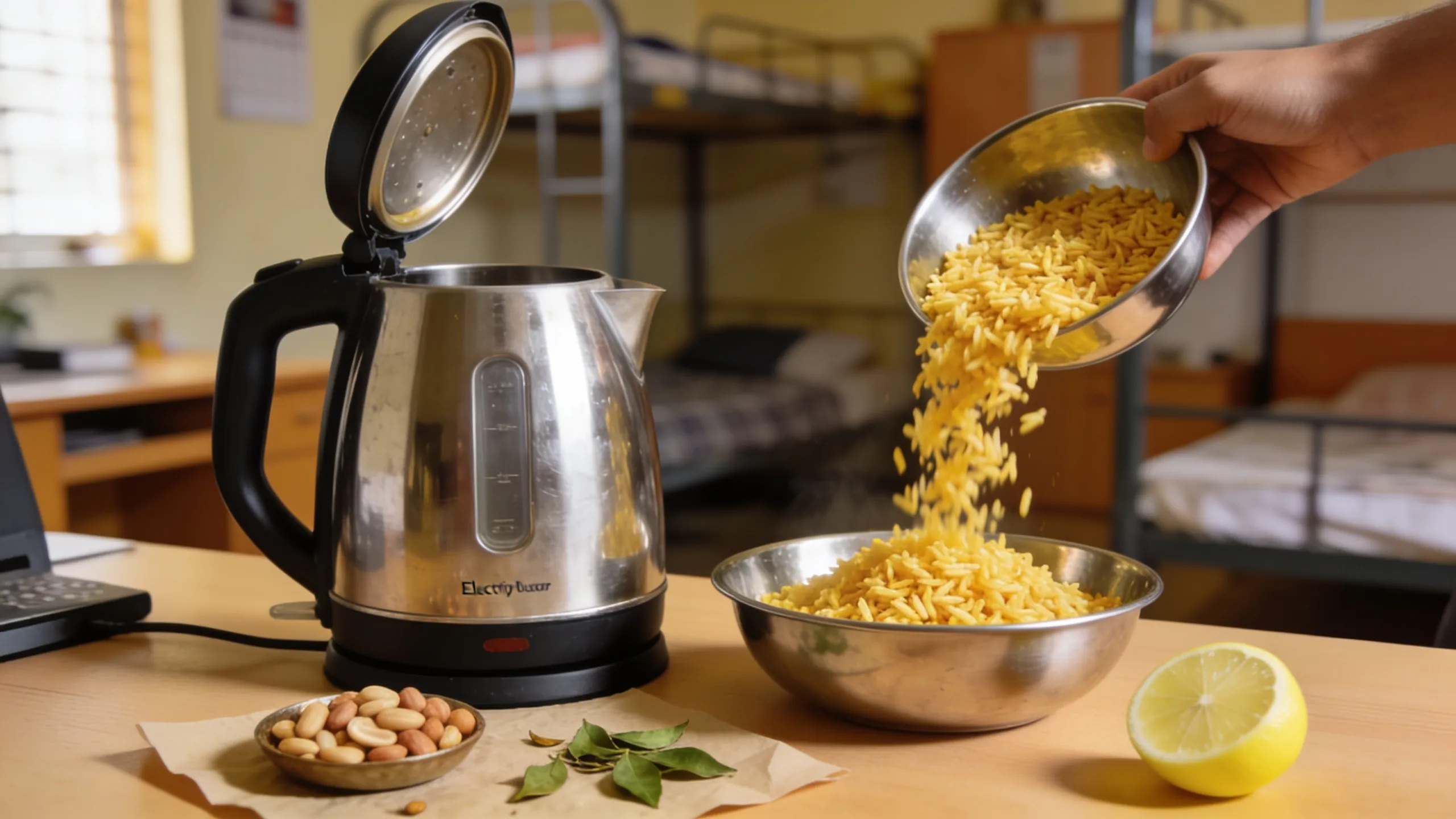 Poha in an electric kettle takes 8 minutes. It costs ₹10 per serving and tastes better than most mess breakfasts.
Step 4, Tiffin Services: Hostel Food Alternative for Daily Meals
Tiffin services are the middle ground between mess food and restaurant delivery. A local home kitchen sends you lunch and/or dinner in a dabba, usually with 2-3 items (roti, sabzi, dal, rice). Rates run ₹1,500–₹3,500/month depending on the city and meal count.
How to Find a Good Tiffin Service
- Ask senior students on your floor. The best tiffin services run on word-of-mouth. Seniors know which ones are consistent and which ones ghost you after the first week.
- Check local WhatsApp groups for your hostel area. Tiffin providers advertise there in cities like Pune, Bangalore, and Mumbai.
- Trial before committing. Order 3 days of trial before signing up for a month. Check portion size, taste consistency, and delivery timing.
- Negotiate group rates. If 4-5 students from your floor sign up together, most tiffin services give a ₹200–₹500/month discount.
Tiffin Service Cost by City
| City | Lunch Only (Monthly) | Lunch + Dinner (Monthly) |
|---|---|---|
| Pune | ₹1,500–₹2,200 | ₹2,800–₹4,000 |
| Bangalore | ₹1,800–₹2,500 | ₹3,000–₹4,500 |
| Mumbai | ₹2,000–₹3,000 | ₹3,500–₹5,000 |
| Delhi | ₹1,500–₹2,200 | ₹2,800–₹4,000 |
| Hyderabad | ₹1,200–₹1,800 | ₹2,200–₹3,500 |
| Jaipur | ₹1,000–₹1,600 | ₹2,000–₹3,000 |
Tiffin services work best as a supplement, not a replacement. Use them for dinner (the meal mess kitchens usually get wrong) and eat mess food for lunch.
Step 5, Smart Street Food on a Budget
Street food is part of hostel life. The question is not whether you'll eat it, it's how to eat it without blowing your budget or getting sick.
Budget Street Food Rules
- Set a weekly street food budget (₹200–₹400/week). Once it's gone, it's gone. Without a cap, street food spending creeps up to ₹2,000+/month.
- Pick stalls with high turnover. The chai stall with 20 people at 5 PM is safer than the empty one. High turnover means fresher food and faster oil changes.
- Avoid heavy fried food daily. One plate of samosa or vada pav a week is fine. Daily fried food causes weight gain, acidity, and lethargy, bad news during exams.
- Carry a water bottle. Street food makes you thirsty. Buying a ₹20 water bottle daily adds ₹600/month. Carry your own.
Best Budget Street Food Options by Nutrition
| Food | Cost | Nutrition Value | Good For |
|---|---|---|---|
| Egg roll / egg bhurji with bread | ₹30–₹50 | High protein | Post-study dinner |
| Chole kulche | ₹40–₹60 | Protein + carbs | Lunch alternative |
| Fruit plate (seasonal) | ₹20–₹40 | Vitamins, fiber | Afternoon snack |
| Corn on the cob | ₹20–₹30 | Fiber, low fat | Evening snack |
| Lassi / chaas | ₹15–₹30 | Calcium, protein | Summer hydration |
| Sprout chaat | ₹25–₹40 | Protein, fiber | Healthy snack |
Street food near hostel clusters in areas like Koramangala in Bangalore or Kothrud in Pune tends to be student-priced. The further you go from campus, the more you pay.
Step 6, Meal Prep Without a Kitchen
You don't need a full kitchen to meal prep. You need an electric kettle, a chopping board, a knife, and 30 minutes on Sunday.
Sunday Prep List (30 Minutes)
- Boil 10 eggs, store in the fridge or your cupboard (they last 5 days unrefrigerated if unpeeled). Two eggs with salt and bread = quick breakfast on rush days.
- Soak and boil a batch of sprouts, store in a container. Add lemon, onion, and chaat masala for a protein snack throughout the week.
- Pre-mix dry ingredients, make 5 ziplock bags with rava + salt + dry spices for instant upma. Add boiling water when needed. 3-minute meal.
- Stock fruit, buy bananas (₹40–₹60 for a dozen), seasonal fruit, and peanuts. These don't need refrigeration and serve as study snacks.
- Fill your spice box, salt, turmeric, cumin powder, chili powder, and garam masala. This tiny box makes every kettle meal taste decent.
Thirty minutes of Sunday prep gives you 5-7 backup meals and snacks for the week. No cooking during the week, no late-night Swiggy orders.
Nutrition During Exam Season, What to Eat When It Matters Most
Exam season is when food matters most and when students eat worst. Maggi for dinner, chips for lunch, skipped breakfast. Then they wonder why concentration drops after 2 hours of studying.
Exam Week Eating Rules
- Never skip breakfast. Even if it's just 2 boiled eggs and a banana. Your brain needs glucose after sleeping.
- Oats + peanut butter is the best exam-season breakfast. Slow-release energy for 3-4 hours. Make it in your kettle in 5 minutes.
- Almonds and peanuts for study snacks, not chips or biscuits. Protein and healthy fats sustain focus better than sugar spikes.
- Stay hydrated. Dehydration causes headaches and poor concentration. Keep a 1L bottle on your desk and finish it before refilling.
- Avoid heavy fried food before afternoon study sessions. That plate of chole bhature at lunch will put you to sleep by 2 PM.
- Light dinner on the night before exams. Khichdi, dal-rice, or soup and bread. Heavy meals disrupt sleep.
Managing your student budget for food is easier when you plan meals around your exam schedule rather than reacting to hunger pangs at midnight.
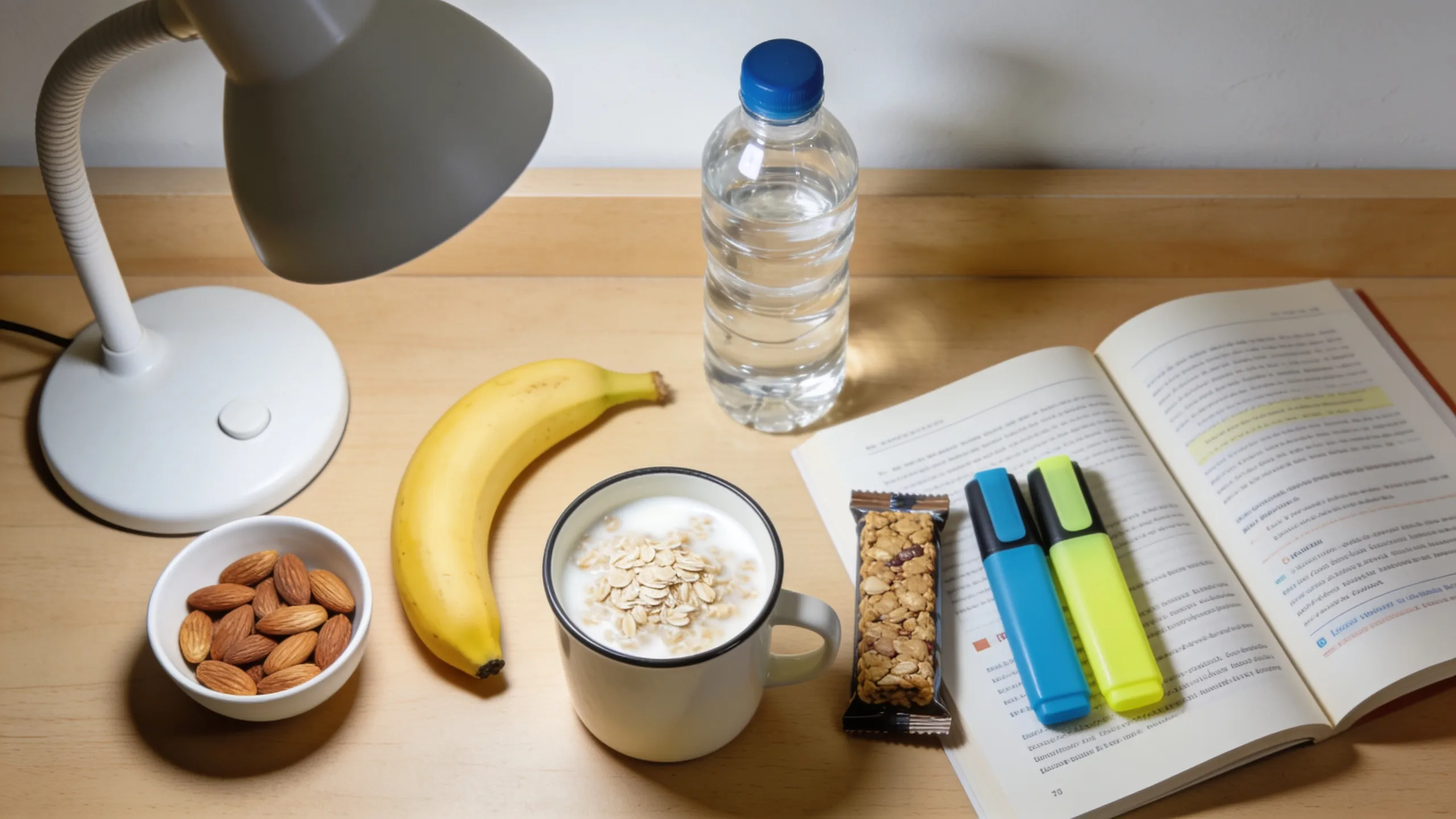 Exam week food kit: oats, bananas, peanut butter, almonds, and water. Simple, cheap, and proven to sustain focus.
Monthly Food Budget Breakdown, Beyond Mess Fees
Here's a realistic monthly food budget for a hostel student who wants to eat well without overspending:
| Category | Monthly Spend | Notes |
|---|---|---|
| Mess food (included) | ₹0 (already paid) | Cover 60-70% of meals |
| Ready-to-eat packets (8/month) | ₹500–₹700 | Worst mess-day dinners |
| Electric kettle groceries | ₹400–₹600 | Eggs, oats, rava, poha |
| Tiffin service (dinner only) | ₹1,500–₹2,500 | Optional, replaces mess dinner |
| Street food (weekly budget) | ₹800–₹1,200 | Capped at ₹300/week |
| Fruits and dry snacks | ₹300–₹500 | Bananas, peanuts, seasonal fruit |
| Total (without tiffin) | ₹2,000–₹3,000 | |
| Total (with tiffin) | ₹3,500–₹5,500 |
Compare this to ordering Swiggy/Zomato daily: that runs ₹4,500–₹7,500/month easily. A planned food system saves ₹2,000–₹4,000 every month.
Key Takeaways
- The mess is not great, but it's subsidized. Eat the good days, supplement the bad days
- Stock 5-10 ready-to-eat packets (MTR, Haldiram's) as emergency dinners at ₹60–₹90 each
- An electric kettle makes 10+ actual meals beyond tea and Maggi, poha, upma, oats, eggs, khichdi, pasta
- Tiffin services cost ₹1,500–₹3,500/month and work best for dinner replacement
- Set a ₹200–₹400/week street food cap to prevent budget creep
- Sunday meal prep (30 minutes) gives you backup food for the entire week
- During exams, eat protein-rich breakfasts and avoid heavy fried food before study sessions
- Total monthly food spending beyond mess: ₹2,000–₹3,000 (without tiffin) or ₹3,500–₹5,500 (with tiffin)