

Every year between June and September, monsoon hostel tips India searches spike for one reason: hostel rooms turn into damp, musty traps that wreck your clothes, books, and mood. The wall behind your bed grows mold. Your jeans take three days to dry. Your shoes stink. And the mosquitoes multiply like they got a bulk discount.
This guide covers everything you need to handle the Indian monsoon in a hostel room -- from dampness prevention and mold control to clothes-drying hacks and waterproofing your gear. If you're moving into a hostel for the first time, read the hostel room essentials checklist first so you've the basics covered before the rains hit.
Why Monsoon Hits Hostel Rooms Harder Than Homes
A hostel room has three disadvantages during monsoon. First, shared bathrooms push humidity into corridors and rooms. Second, most budget hostels lack exhaust fans or proper ventilation in rooms. Third, ground-floor and semi-basement rooms -- common in cities like Mumbai and Pune -- sit in waterlogging zones.
Add four people drying wet clothes in one room, and you get a humidity level that encourages mold growth within 48 hours. The fix is not one product. It's a system of small habits and affordable tools.
Dampness Prevention -- Stop It Before It Starts
Hostel room dampness monsoon problems begin with moisture buildup that you don't notice for the first week. Here's how to prevent it:
- Keep windows cracked open during non-rain hours. Even 15 minutes of airflow breaks the humidity cycle.
- Pull beds and bags 3-4 inches away from walls. Wall contact transfers moisture to mattresses and backpacks.
- Use moisture absorber packets. Place one near your cupboard, one under the bed, and one near shoes. Brands like Boncafe and Old Spice moisture sachets cost ₹80-₹150 for a pack of three.
- Wipe down surfaces weekly with a dry cloth. Focus on the cupboard base, windowsill, and the wall behind your bed.
- Run a table fan pointed at damp corners for 30 minutes daily. Moving air is the cheapest dehumidifier.
If your hostel has a common area with better ventilation, store your suitcase and off-season clothes there during peak monsoon months.
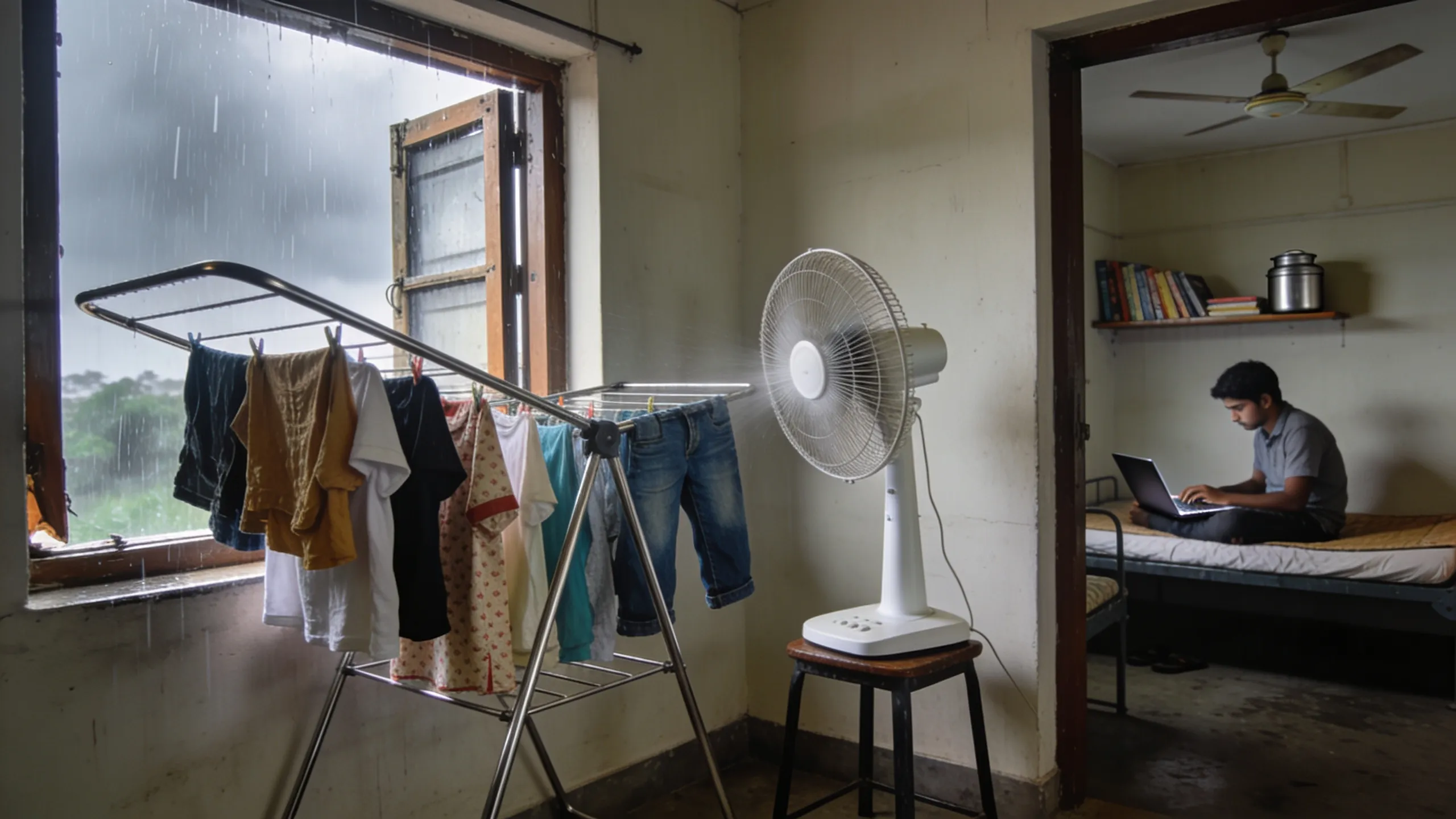 A ₹400 drying rack plus a table fan cuts your monsoon drying time from three days to under 12 hours.
Mold Control -- What to Do When Spots Appear
Mold appears as black or green spots on walls, inside cupboards, and on leather items. In a shared hostel room, you can't repaint walls, but you can contain the damage.
Quick Mold Removal Steps
- Mix white vinegar and water in a 1:1 ratio in a spray bottle. Total cost: ₹30.
- Spray the affected area and let it sit for 10 minutes.
- Scrub with an old toothbrush or rough cloth.
- Wipe dry and apply a thin layer of camphor-based balm (₹20 at any medical store) to prevent regrowth.
- For cupboard interiors, place naphthalene balls or clove sachets.
If the mold covers a large section of wall (more than a foot across), report it to hostel management. Prolonged mold exposure causes respiratory issues -- this is a health matter, not a cosmetic one. Students in Bangalore hostels and Hyderabad PGs face this less than Mumbai and Pune, but no city is immune during August.
How to Dry Clothes in a Monsoon Hostel Room
This is the single biggest monsoon headache. You wash clothes, hang them in the room, and two days later they still smell damp. Here's the system that works:
The Spin-Hang-Fan Method
- Spin dry properly. If your hostel has a washing machine, run the spin cycle twice. If hand-washing, wring clothes tight using the towel-roll method -- lay the garment on a dry towel, roll the towel, and twist.
- Hang on a portable drying rack near a window -- not on the bed frame or chair. A foldable stainless steel rack (₹350-₹600 on Amazon) is worth every rupee.
- Point a table fan directly at the rack. This cuts drying time from 36+ hours to 8-12 hours even on a rainy day.
Fabrics That Dry Faster
- Polyester and nylon dry 3x faster than cotton in humid conditions.
- Keep 4-5 quick-dry t-shirts and shorts for monsoon rotation. You don't need your entire wardrobe available.
- Avoid drying heavy items like jeans and towels indoors. Use the hostel terrace on the first dry morning you get.
If you're packing for a hostel move during monsoon, our essentials checklist covers fabric choices and monsoon-specific gear.
Waterproofing Your Bags, Shoes & Electronics
The walk from your hostel to the bus stop or metro station will soak through a regular backpack in five minutes of heavy rain. Here's how to protect your stuff:
Bags
- Rain cover for your college bag. Most bags above ₹1,000 come with a built-in rain cover in the bottom zipper pocket. Check yours. If it doesn't have one, buy a universal rain cover for ₹150-₹250.
- Dry bags for documents. A 5-litre dry bag (₹200-₹350) keeps your laptop, marksheets, and ID cards bone dry even in a downpour.
- Ziplock bags for electronics. A ₹10 ziplock bag protects your phone, earbuds, and charger better than any expensive case.
Shoes
- Waterproof spray (Crep Protect, Dr. Soles -- ₹300-₹500) gives canvas and leather shoes a monsoon coating for 2-3 weeks per application.
- Keep one pair of rubber/EVA sandals for daily monsoon use. Washing and drying sandals takes 2 minutes versus 2 days for sneakers.
- Stuff wet shoes with newspaper and place near a fan. Don't dry them in direct sunlight -- it cracks leather and loosens adhesive.
Students commuting from Andheri hostels or Powai PGs know this drill well. Western Line commuters get drenched at least twice a week in July.
Pest Control -- Monsoon Brings Uninvited Roommates
Mosquitoes, cockroaches, and ants spike during monsoon. In a shared hostel room, individual pest control is limited, but these steps help:
- Plug a liquid mosquito repellent (Good Knight, All Out) every night. Non-negotiable.
- Don't keep food uncovered. Store biscuits, namkeen, and snacks in airtight containers. Ants will find open packets within hours.
- Spray citronella or neem-based repellent (₹100-₹180) along window edges and door gaps weekly.
- Empty water from any container -- bottle caps, cooler trays, bucket lids. Stagnant water breeds dengue mosquitoes.
- Report large cockroach or rat sightings to hostel management immediately. Individual room sprays don't fix building-level infestations.
For a full breakdown of what to look for during hostel visits, especially during monsoon, check the hostel safety tips guide.
Monsoon Hostel Survival Kit -- What to Buy
Here's a condensed shopping list. Total budget: ₹1,500-₹2,500.
| Item | Approx. Cost | Where to Buy |
|---|---|---|
| Moisture absorber packets (pack of 3) | ₹80-₹150 | Amazon, local store |
| Vinegar spray bottle | ₹30-₹50 | Any grocery shop |
| Foldable drying rack (stainless steel) | ₹350-₹600 | Amazon, Flipkart |
| Universal bag rain cover | ₹150-₹250 | Amazon |
| 5L dry bag for documents | ₹200-₹350 | Amazon |
| Waterproof shoe spray | ₹300-₹500 | Amazon, shoe stores |
| Liquid mosquito repellent refill | ₹100-₹150 | Any general store |
| EVA/rubber sandals | ₹200-₹400 | Decathlon, local market |
This post may contain affiliate links.
Key Takeaways
- Pull beds away from walls and use moisture absorbers to prevent hostel room dampness monsoon problems before they start.
- The spin-hang-fan method cuts indoor clothes drying time to under 12 hours.
- Waterproof your bag, documents, and shoes -- a ₹200 dry bag saves ₹20,000 worth of electronics.
- Treat mold immediately with vinegar solution. Report large patches to management.
- Budget ₹1,500-₹2,500 for a complete monsoon survival kit that lasts the entire season.
- Keep one pair of quick-dry sandals and 4-5 polyester t-shirts in your monsoon rotation.