

Nobody teaches you how to do laundry before you move to a hostel. You throw clothes in a bucket, add too much detergent, scrub until your hands hurt, and then hang everything on a rope that sags under the weight. Three days later in monsoon, your clothes still smell damp. Sound about right?
Hostel laundry tips are not glamorous, but getting this wrong ruins more clothes and wastes more money than most students realize. A single white shirt turned pink because it was washed with a red dupatta. Jeans faded in two months because of hot water washes. A favorite kurta shrank because it was wrung out instead of pressed dry.
This guide covers the right way to hand wash, how to use shared machines without disasters, monsoon drying hacks that actually work, stain removal for the 5 most common hostel stains, and a laundry schedule that prevents fights over shared facilities.
If you're setting up your hostel room, check the complete hostel room essentials checklist, it includes the laundry supplies you need from day one. And if you've the budget, a portable washing machine changes the game entirely.
Hand Wash Technique, The Right Way (Most Students Get It Wrong)
Hand washing is the default for 70% of hostel students. Most do it badly, too much soap, too much scrubbing, rinsing once instead of twice. Here's the method that protects your clothes and your time.
Step-by-Step Hand Wash Process
1. Sort first. Separate darks, whites, and colors. Wash whites first (cleanest water), then colors, then darks. This takes 30 seconds and prevents color transfer disasters.
2. Soak for 15 minutes. Fill your bucket with room-temperature water (never hot for regular clothes). Add 1-2 caps of liquid detergent (not powder, liquid dissolves better and leaves no residue). Submerge clothes and let them soak. This loosens dirt without scrubbing.
3. Scrub the right spots. After soaking, scrub only the dirty areas, collar, underarms, cuffs, and stains. Use a soft brush or rub fabric against fabric gently. Full-garment scrubbing wears out fabric fast.
4. Rinse twice. One rinse is never enough. Leftover detergent causes skin irritation, stiffness, and faster fading. Rinse until the water runs clear.
5. Press, don't wring. Wringing stretches and damages fabric, especially cotton and lycra blends. Instead, fold the garment and press water out against the side of the bucket. For heavy items like jeans, roll them in a dry towel and step on the towel to squeeze water out.
6. Shake and hang immediately. Give each garment a firm shake before hanging. This reduces wrinkles and speeds drying.
Time Estimate
- 5 items (T-shirts, undergarments): 20-25 minutes
- 10 items (full weekly wash): 40-50 minutes
- Jeans and heavy items: add 10 minutes per item
Shared Washing Machine, How to Use Without Problems
Many hostels in cities like Bangalore, Pune, and Mumbai offer shared washing machines on each floor or in a common laundry room. Here's how to use them without ruining your clothes or annoying your floor mates.
Machine Wash Rules
- Check pockets. Coins, pens, and earphones in pockets destroy machines and clothes. This is the number one cause of shared machine complaints.
- Turn clothes inside out. Protects prints, embroidery, and dark colors from fading.
- Use the right amount of detergent. For a front-loader: 1 tablespoon of liquid detergent. For a top-loader: 2 tablespoons. More soap doesn't mean cleaner clothes, it means soap residue on everything.
- Don't overload. Fill the drum 75%, not 100%. Overloaded machines don't clean properly and strain the motor (which the entire floor pays for).
- Remove clothes immediately. Clothes sitting in a wet drum for 2+ hours start smelling. Set a phone alarm for when the cycle ends.
Shared Machine Etiquette
- Follow the posted schedule. If there's no schedule, propose one (see section below).
- Never remove someone else's clothes from the machine. Leave them alone or notify the person.
- Wipe the rubber seal and leave the door open after use. This prevents mold and the next person gets a clean machine.
- Report machine problems to the warden immediately. A leaking machine floods the laundry room fast.
Drying Clothes in Monsoon, The Real Challenge
Washing is the easy part. Drying clothes during Indian monsoon (June–September) is where hostel laundry becomes a genuine problem. Humidity stays above 80%, clothes take 2-3 days to dry on a line, and damp clothes develop that musty smell that doesn't leave.
Monsoon Drying Hacks That Actually Work
1. The towel-roll method. Roll wet clothes inside a dry towel and press firmly (or step on the roll). This removes 40-50% more water than hand wringing. The clothes start almost half-dry.
2. Use a portable drying rack indoors. A foldable steel drying rack (₹500–₹800 on Amazon) fits inside your room. Position it near the window or under the ceiling fan. Hanging clothes on bathroom pipes or door frames blocks shared space and annoys roommates.
3. Fan + newspaper trick. Place crumpled newspaper sheets under the drying rack. Newspaper absorbs moisture from the air around drying clothes. Run the ceiling fan on medium speed. This combination cuts drying time from 48 hours to 12-18 hours even in peak monsoon.
4. Iron while slightly damp. If you need a specific garment dry fast, iron it while it's still slightly damp. The heat dries it completely and removes wrinkles in one step. Works great for college shirts and kurtas.
5. Rotate clothes on the rack. Flip clothes once halfway through drying. The side facing the fan dries faster. Rotating ensures even drying and prevents the damp-patch problem.
6. Avoid drying in the bathroom. Bathrooms have the highest humidity in any hostel room. Drying clothes there actually makes them damper. Always dry in the main room with airflow.
Monsoon Laundry Schedule Adjustment
In monsoon, increase your washing frequency. Wash smaller loads 3 times a week instead of one big load once a week. Smaller loads dry faster. Plan your heaviest items (jeans, bedsheets) for days with some sun or wind, check the weather forecast before washing.
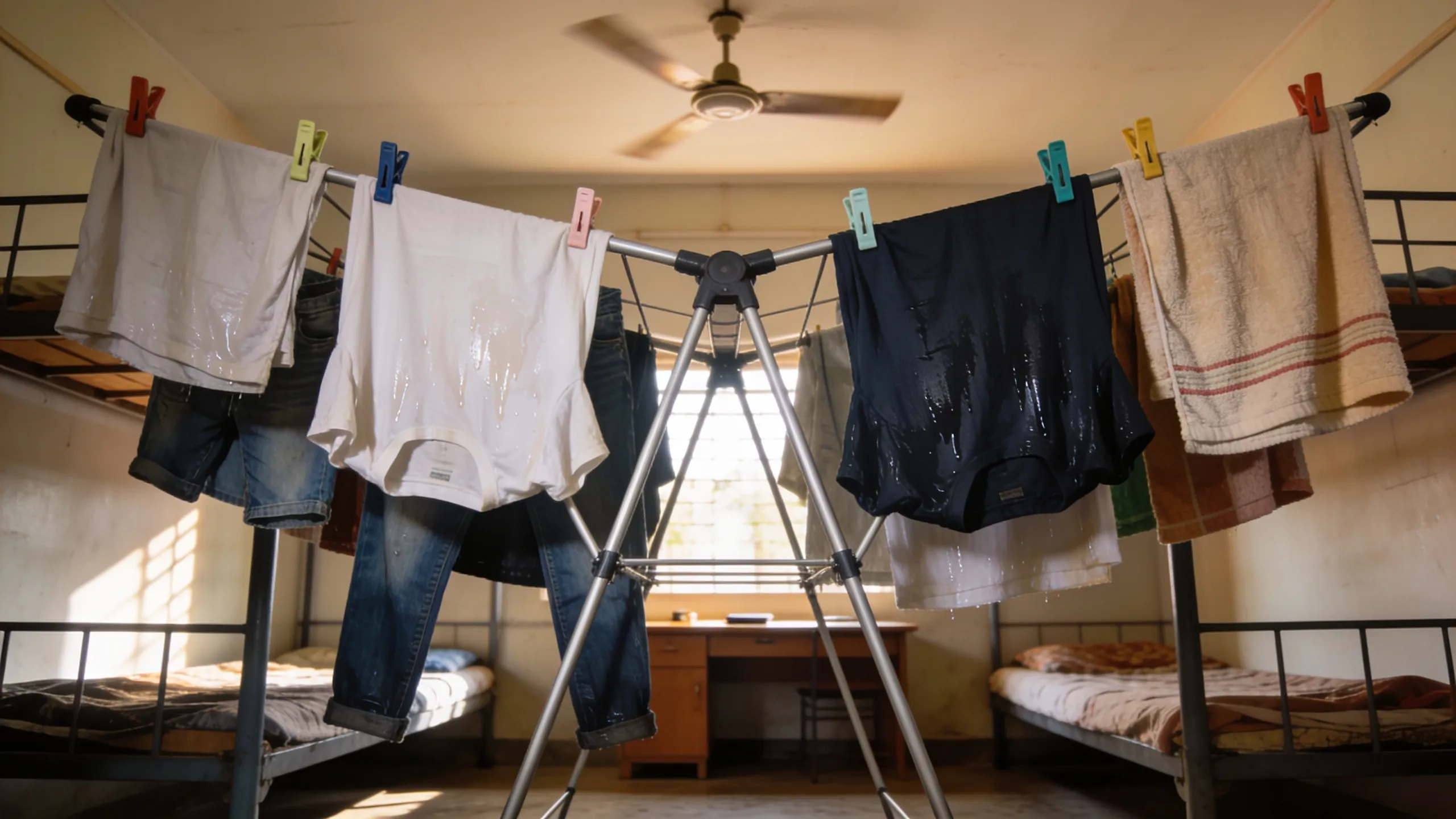 A ₹600 drying rack plus a ceiling fan on medium speed, this is the monsoon laundry setup that prevents musty clothes.
Stain Removal, 5 Most Common Hostel Stains
You spill something. You don't have a stain remover. You panic and scrub with soap, which sets the stain permanently. Here's what actually works for the stains hostel students deal with most.
Quick Stain Guide
| Stain Type | Do This Immediately | Do NOT Do This |
|---|---|---|
| Chai/coffee | Rinse with cold water. Apply baking soda paste (baking soda + water), leave 15 min, then wash normally. | Do not use hot water, it sets the tannin stain permanently. |
| Ink (pen leak) | Apply hand sanitizer or rubbing alcohol on the stain. Blot with a cloth. Repeat until ink lifts. Wash with detergent. | Do not rub, it spreads the ink. Blot only. |
| Oil/food grease | Sprinkle talcum powder or cornstarch on the stain immediately. Leave 10 min to absorb oil. Brush off. Wash with dish soap (not cloth detergent, dish soap cuts grease better). | Do not put the garment in water first. Water spreads oil stains. |
| Blood | Soak in cold salt water (2 tablespoons salt per bucket) for 30 minutes. Wash with cold water and soap. | Never use hot water. Heat permanently sets blood stains into fabric. |
| Sweat yellowing | Soak the affected area in a mix of baking soda + white vinegar + water for 30 minutes. Scrub gently. Wash normally. Sun-dry for natural bleaching effect. | Do not bleach colored clothes. Bleach removes color along with the stain. |
Hostel hack: Keep a small bottle of hand sanitizer (₹30) near your laundry supplies. It removes ink, marker, and some food stains in emergencies.
Stain Remover Products Worth Having
- Vanish Oxy Action (₹100–₹150): Works on most fabric stains. Soak the garment with one scoop for 30 minutes before washing.
- Tide to Go pen (₹200–₹300): Portable stain remover pen. Carry it to classes for emergency stains on white shirts.
- Dish soap (Vim liquid) (₹40): The best grease and food stain remover. Better than cloth detergent for targeted stains.
Laundry Schedule for Shared Facilities
If your hostel has shared washing machines and drying areas, schedule conflicts are inevitable. Here's a floor-level schedule that works.
Proposed Weekly Schedule (For a Floor of 8-10 Rooms)
| Time Slot | Monday | Wednesday | Friday | Sunday |
|---|---|---|---|---|
| 7:00-8:30 AM | Room 1-2 | Room 5-6 | Room 1-2 | Open (first come) |
| 8:30-10:00 AM | Room 3-4 | Room 7-8 | Room 3-4 | Open (first come) |
| 4:00-5:30 PM | Room 5-6 | Room 1-2 | Room 5-6 | Open (first come) |
| 5:30-7:00 PM | Room 7-8 | Room 3-4 | Room 7-8 | Open (first come) |
How to implement: Print this schedule, get floor mates to agree (WhatsApp group poll works), and pin it next to the machine. Sunday stays open as a flexible day. The warden usually supports this because it reduces complaints.
If your floor doesn't have a schedule and fights keep happening, this is exactly the kind of shared space etiquette issue worth bringing up in a floor meeting.
Laundry Products, What to Buy on Day One
| Product | Use | Cost | Where to Buy |
|---|---|---|---|
| Liquid detergent (500ml) | Better than powder for hand wash, dissolves fully | ₹120–₹180 | Supermarket |
| Detergent sheets (travel pack) | Dissolve in water, no measuring, no spills | ₹200–₹350 for 30 sheets | Amazon |
| Fabric softener (small bottle) | Keeps clothes soft and reduces static, especially in winter | ₹80–₹120 | Supermarket |
| Soft laundry brush | Scrub collars, cuffs, and stains without damaging fabric | ₹40–₹60 | Local store |
| Foldable drying rack | Indoor drying during monsoon | ₹500–₹800 | Amazon |
| Clip hangers (pack of 12) | Hang socks, undergarments, and small items efficiently | ₹80–₹120 | Amazon/local |
| Vanish Oxy Action (small tub) | Pre-soak stain treatment | ₹100–₹150 | Supermarket |
| Tide to Go pen | Emergency stain remover, carry to class | ₹200–₹300 | Amazon |
Total day-one laundry kit cost: ₹1,100–₹1,800. This covers you for 3-4 months of supplies.
How to Handle Dhobi and Laundry Services
Some hostels near Jaipur and Delhi have dhobi partnerships or nearby laundry shops. Here's how to use them without losing clothes or money.
Dhobi Service Tips
- Itemize everything. Count and list each item before handing it over. Take a photo of the bag contents. Missing items are common, your count is your proof.
- Separate delicates. Hand over only sturdy cotton and regular clothes to dhobis. Keep anything with embroidery, silk, or delicate fabric for hand wash.
- Negotiate monthly rates. Daily per-piece pricing adds up fast. A monthly plan (₹500–₹1,000 for 30-40 items) saves 20-30% vs. Per-item charges.
- Set clear timelines. Agree on pickup and return days. If the dhobi is consistently late, switch.
Laundry App Services
Apps like UClean and LaundryMate operate in major cities. Pricing runs ₹50–₹80 per kg (wash + fold) or ₹80–₹120 per kg (wash + iron). These work well for monthly bulk washes, bedsheets, curtains, and heavy items that are hard to hand wash and take forever to dry. Not cost-effective for daily clothes.
Key Takeaways
- Soak before scrubbing. 15 minutes of soaking saves 20 minutes of scrubbing and protects your clothes
- Press, don't wring. Wringing damages fabric, roll clothes in a dry towel to remove excess water instead
- In monsoon, wash smaller loads more often. Three small loads dry in 18 hours; one big load takes 3 days
- Fan + newspaper under the rack cuts indoor drying time by 50%
- Sort darks, whites, and colors every time. One red sock ruins all your white T-shirts
- Keep hand sanitizer as an emergency stain remover, it works on ink, marker, and some food stains
- Propose a laundry schedule for shared machines. Print it, pin it, and eliminate floor arguments
- Day-one laundry kit costs ₹1,100–₹1,800 and lasts 3-4 months