

Nobody moves into a hostel planning to live in filth. But three weeks in, there's dust on the desk, hair in the drain, food crumbs under the bed, and a smell you can't identify. It happens because hostel rooms don't have a cleaning routine, just occasional panic cleaning before parents visit.
A proper hostel room cleaning routine takes 30 minutes per week. That's less time than one episode of a web series. The result: fewer pests, fewer allergies, less friction with roommates, and a room that doesn't embarrass you when someone visits.
This guide gives you a weekly schedule, a supplies list under ₹500, a shared room cleaning agreement that actually works, and daily habits that keep the mess from building up between cleaning sessions.
Why a Cleaning Routine Beats Panic Cleaning
Most hostel residents clean only when things get unbearable or when family announces a visit. That approach has real costs. Dust accumulates in 3-4 days on flat surfaces in cities like Delhi and Pune, where air quality stays poor for most of the year. A week of uncleaned surfaces means you're breathing in that dust every night while sleeping.
Cockroaches can detect food residue within hours. A single uncovered plate left overnight is enough to attract them. Once pests establish a trail in your room, removing them takes weeks of effort and often ₹200-₹400 worth of pest spray. Prevention through regular cleaning costs nothing extra.
There's also the roommate angle. In a shared room, one person's mess affects everyone. Dirty laundry on the floor, an overflowing dustbin, food wrappers stuffed in corners: these create tension that builds silently until it explodes into a proper argument. A fixed routine removes ambiguity about who cleans what and when.
A scheduled 30-minute weekly clean keeps things manageable. You never face that overwhelming "where do I even start" feeling because the room never gets bad enough to need it.
The Cleaning Supplies Kit (Under ₹500)
Buy everything once. Refill as needed. This kit handles a full semester.
| Item | Price | Lasts | Where to Buy |
|---|---|---|---|
| Broom + dustpan | ₹80-₹120 | 1-2 years | Any general store |
| Floor cleaner (Lizol/Dettol 500ml) | ₹80-₹120 | 2-3 months | DMart, BigBasket, or local kirana |
| Mop cloth or old t-shirt | ₹30-₹50 | 3-6 months | Use an old t-shirt for free |
| Surface cleaner spray | ₹60-₹100 | 3 months | Any supermarket |
| Toilet cleaner | ₹50-₹80 | 2 months | Any supermarket |
| Scrub brush (bathroom) | ₹30-₹50 | 6 months | Any general store |
| Dustbin (small, with lid) | ₹50-₹100 | 1+ year | Local plastic shop or online |
| Garbage bags (pack of 30) | ₹50-₹80 | 2 months | DMart or BigBasket |
Total initial cost: ₹430-₹700. After the first purchase, monthly restocking costs ₹50-₹100 (floor cleaner and garbage bags). If you share a room, split the supplies cost with your roommate. That brings the per-person cost to ₹215-₹350, cheaper than a single Swiggy order.
Skip specialized products like glass cleaners or anti-bacterial wipes. The surface cleaner spray handles mirrors, desks, and shelves equally well. One product, multiple surfaces.
For the complete list of what you need in your hostel room, check our hostel room essentials checklist.
Daily Habits That Take 5 Minutes
The weekly routine works best when daily habits prevent the worst buildup. None of these take more than a minute each.
- Make your bed after waking up. It takes 90 seconds and changes how the entire room looks. An unmade bed makes the room feel messy even when everything else is clean.
- Put clothes away immediately. Worn clothes go in the laundry bag. Clean clothes go in the almirah. The chair is not a wardrobe.
- Wipe the desk before studying. A quick swipe with a dry cloth removes the day's dust. This matters especially during exam weeks when you're spending 8-10 hours at the desk.
- Empty food containers before bed. Never leave food out overnight. Cockroaches and ants are nocturnal scavengers. Even a few grains of rice or biscuit crumbs attract them within hours.
- Take the dustbin out when it's full. Don't wait for it to overflow. A full dustbin with food waste starts smelling within 12 hours in Indian summer temperatures (35-45 degrees Celsius).
These five habits take a combined 5 minutes daily. They're the difference between a room that needs a quick 30-minute weekly clean and one that needs a 2-hour rescue operation.
The 30-Minute Weekly Routine
Do this every Sunday morning (or whatever day works). Set a timer. Put on a playlist. It goes fast.
Minutes 0-5: Declutter
- Pick up clothes from the floor. Dirty ones go in the laundry bag, clean ones in the almirah.
- Throw away food wrappers, empty packets, and expired items.
- Clear the desk surface, put books and stationery in their spot.
- Empty the dustbin into a garbage bag.
- Check the area under the bed and behind the door. These are dead zones where clutter migrates without you noticing.
Minutes 5-12: Sweep and Mop
- Sweep the entire floor. Move the chair, check under the bed. This is where most dust, hair, and crumbs collect.
- Quick mop with floor cleaner mixed in water. A wet cloth on the floor works if you don't have a mop. Use about 2 capfuls of Lizol or Dettol per half-bucket of water.
- Pay extra attention to corners and the area around the door, that's where dust enters first.
- Mop from the far corner toward the door so you don't walk over the wet floor.
Minutes 12-18: Surfaces and Storage
- Wipe the desk, shelf, and almirah top with surface cleaner spray and a cloth.
- Wipe the window sill, dust collects there fast, especially in cities like Delhi and Pune.
- Organize the almirah, fold what's unfolded, rearrange what shifted during the week.
- Wipe down the switchboard and plug points with a dry cloth. Dusty switchboards are a fire risk and a common inspection flag in hostels.
Minutes 18-25: Bathroom (If Attached)
If you've a shared bathroom, coordinate with roommates. Each person cleans once per week on rotation.
- Scrub the toilet with toilet cleaner and brush (2 minutes)
- Scrub the floor drain, pull out hair and debris (1 minute)
- Wipe the mirror and tap handles (1 minute)
- Quick mop the bathroom floor (2 minutes)
- Refill the soap dispenser if it's low
- Check for mold around the shower area and drain. If you spot black spots, scrub with a mix of bleach and water (1 part bleach to 10 parts water). Mold spreads fast in poorly ventilated hostel bathrooms.
Minutes 25-30: Final Touches
- Make your bed properly, fresh bedsheet if it's been a week
- Take the garbage bag to the common bin
- Open the window for 10 minutes to air out the room
- Spray air freshener if needed (or just keep the window open)
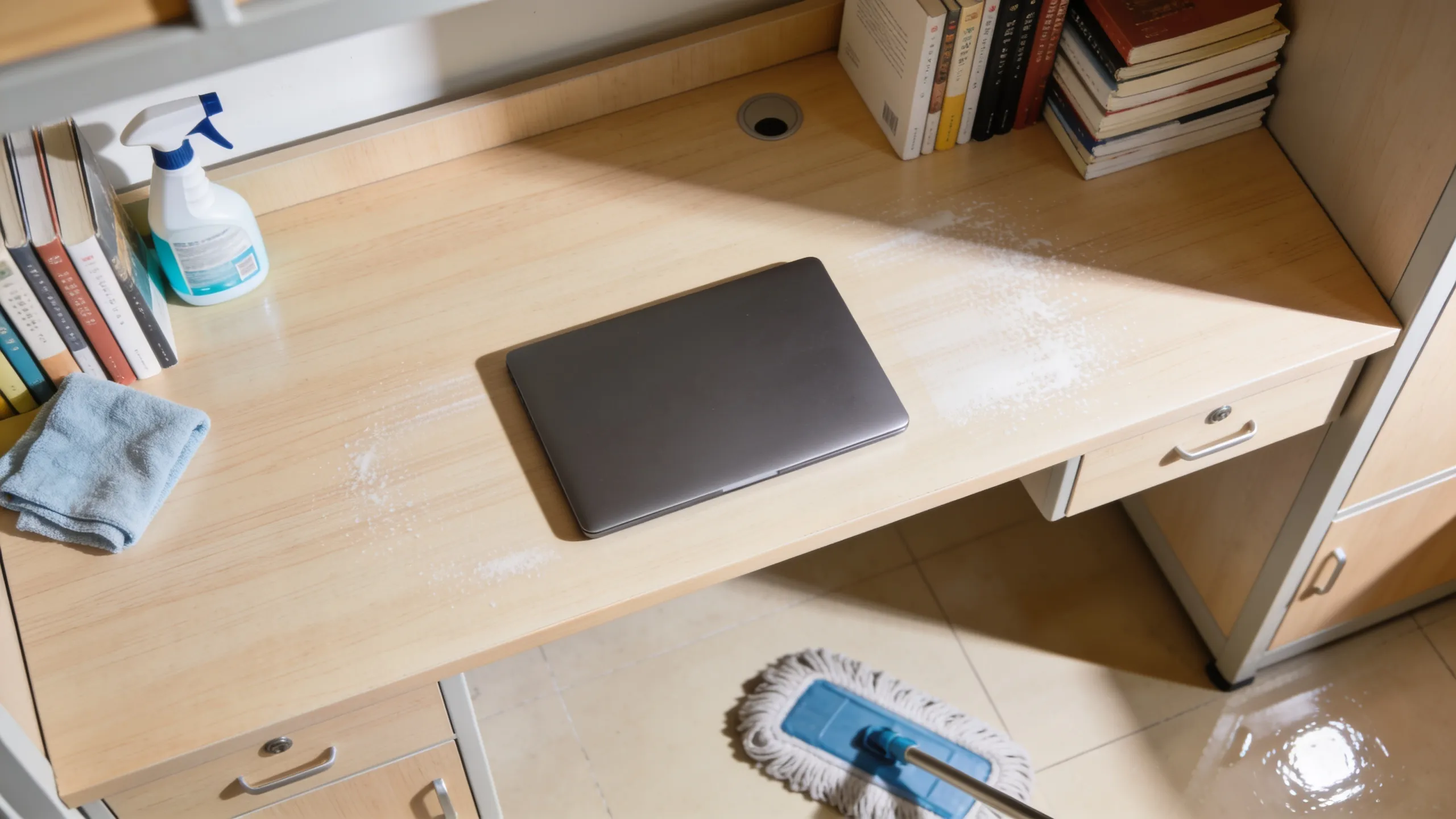 A clean desk takes 3 minutes to maintain. A cluttered one takes 20 minutes to dig through when you need something.
Monthly Deep Cleaning Checklist
Once a month, spend an extra 20 minutes on tasks the weekly routine doesn't cover. Pick the first Sunday of each month.
| Task | Time | Why It Matters |
|---|---|---|
| Wash bedsheets, pillow covers, and mattress protector | 5 min (loading + hanging) | Dead skin cells accumulate and attract dust mites |
| Wipe inside the almirah | 5 min | Dust settles inside, especially on folded clothes |
| Clean behind and under furniture | 5 min | Spiders and cockroaches nest in undisturbed areas |
| Scrub bathroom tiles with a brush | 5 min | Soap scum and hard water stains build up over weeks |
| Check and clean the exhaust fan (if present) | 3 min | Clogged fans don't ventilate, leading to mold |
| Wipe charging cables and laptop screen | 2 min | Cables collect dust; screens develop a film that strains eyes |
The monthly deep clean adds about ₹0 in extra supplies since you're using the same kit. It prevents the kind of grime buildup that requires professional cleaning or, worse, leads to a pest infestation that your warden notices during room inspection.
The Shared Room Cleaning Agreement
If you share a room, cleaning disputes are inevitable unless you set rules in week one. Here's a template that works:
The Room Cleaning Pact
- Floor cleaning rotates weekly. Week 1: Person A sweeps and mops. Week 2: Person B. Mark it on a physical calendar pinned to the wall or set a recurring reminder on your phone. Don't rely on memory.
- Bathroom cleaning rotates. Same rotation as floor. Or split: one person does toilet, the other does floor/drain.
- Personal area is personal responsibility. Each person keeps their bed, desk, and almirah section clean. No excuses.
- Dustbin duty. Whoever fills it, empties it. Or alternate weekly.
- Food rules. No open food containers overnight. Covered containers only. This prevents pests.
- Laundry. Dirty clothes in a closed laundry bag, not on the floor or chair.
What to Do When the System Breaks Down
It will. Someone gets busy with exams, falls sick, or just gets lazy. Here's how to handle it without damaging the relationship.
- First skip: Send a casual reminder on the room WhatsApp group. Something like "Hey, it's your floor week, I'll be out till 6 if you want to get it done." No guilt-tripping.
- Second skip: A direct but calm conversation. "I've done the last two weeks. Can you catch up this week?" Frame it as fairness, not accusation.
- Persistent pattern: Involve the warden or RA if the situation doesn't improve. Most hostels have hygiene standards, and wardens can enforce them.
The enforcement mechanism: Peer pressure. If one person doesn't clean on their rotation week, the room gets visibly worse. A gentle reminder on the group chat is fair game. Our hostel roommate problems guide has scripts for these conversations.
Monsoon-Specific Cleaning Tips
Monsoon months (June-September) bring specific hygiene challenges in hostel rooms across India. Humidity levels in coastal and central Indian cities regularly cross 80-90%, creating ideal conditions for mold, mildew, and pest breeding.
- Dry the bathroom floor after every shower. Standing water breeds mosquitoes and mold. A simple squeegee (₹100-₹150) makes this take 30 seconds instead of waiting for air drying.
- Sun-dry bedsheets and towels when possible. Dampness causes fungal infections. If sun isn't available, hang clothes on a drying rack near the window rather than draping them over furniture, where they trap moisture against the surface.
- Check under the bed weekly. Moisture collects in dark areas during monsoon. If you find dampness, place a newspaper sheet under stored items, it absorbs moisture and you can replace it weekly.
- Clean the drain more frequently. Hair and debris clog faster with rain water. Pour a mug of hot water down the bathroom drain twice a week to clear soap buildup.
- Use camphor balls in the almirah, prevents moisture damage to clothes. Place 2-3 balls per shelf. Replace them when they shrink to pea size (roughly every 3-4 weeks).
- Keep the window mesh clean. Mosquitoes exploit any gap during monsoon. Wipe the mesh with a damp cloth weekly to remove dust that blocks airflow.
- Watch for wall dampness. If you see paint bubbling or dark patches on the wall, report it to the hostel management immediately. Wall dampness leads to mold that can cause respiratory issues.
In humid cities like Mumbai and Chennai, monsoon cleaning frequency should double to twice per week for bathroom areas. Students in drier cities like Jaipur or Bangalore can stick to the standard weekly schedule, but should still keep an eye on bathroom ventilation.
Common Cleaning Mistakes to Avoid
Even students who clean regularly make these errors that reduce the effectiveness of their routine.
- Sweeping without moving furniture. If you sweep around the chair and bed without moving them, you're leaving the dirtiest areas untouched. Pull the chair out. Slide the bed if possible. Two extra minutes saves you from a cockroach nest discovery later.
- Using too much floor cleaner. More cleaner doesn't mean more clean. Excess floor cleaner leaves a sticky residue that actually attracts more dust. Two capfuls per half-bucket is enough.
- Ignoring the mattress. Flip or rotate your mattress once a month. Hostel mattresses are rarely new, and sleeping on the same spot creates a permanent indent that collects sweat and dead skin. A ₹200-₹300 mattress protector is one of the best hygiene investments you can make.
- Cleaning only when it looks dirty. By the time a surface looks visibly dusty, it's been accumulating particles for days. The weekly schedule prevents this. Clean on schedule, not on sight.
- Skipping the dustbin lid. An open dustbin is an invitation for flies and cockroaches. Always use a bin with a lid, and line it with a garbage bag for easy disposal.
The connection between cleaning and pest control is direct. A dirty room attracts cockroaches, ants, and bed bugs. Read our pest control guide for what to do if pests have already arrived. Also check our hostel room organization hacks for systems that keep the room tidy between cleanings.
---
Looking for hostels with good housekeeping? Browse hostels on Hostel360, compare amenities including cleaning services. No brokerage, ever.