

Hostel safety tips for students in India start with one uncomfortable fact: most incidents happen because of habits, not criminals. Unlocked rooms, shared passwords, drinking unfiltered water, and walking alone at 2 AM through an unfamiliar lane, these are fixable problems. This guide covers physical security, digital safety, food hygiene, and personal safety protocols that apply whether you're in a hostel in Mumbai, a PG in Bangalore, or a shared room in any Indian city.
If you're moving into a hostel for the first time, also go through the girls hostel safety checklist for gender-specific precautions.
Hostel Safety Tips for Room Security, Lock It Down
Your room is the only private space you control. Treat it that way.
- Use your own padlock. Hostel-issued locks are duplicated. Buy a Godrej or Europa padlock (₹300–₹500) and keep the only spare key with a trusted friend, not under your mattress.
- Lock your room every single time you leave. Even for a 5-minute bathroom trip. Opportunistic theft takes 90 seconds.
- Get a small portable safe or a cable lock for your laptop. Steel cable laptop locks cost ₹400–₹600 on Amazon and attach to any bed frame.
- Keep valuables out of sight. Cash, jewellery, and electronics should be inside your bag, inside a locked cupboard. Not on the desk. Not on the bed.
- Know your roommates' schedules. If someone enters your room at an unusual time, you should notice. Familiarity is your first layer of security.
If you're evaluating a new hostel, check whether doors have deadbolts and whether windows have functional latches. These basics are covered in our PG selection checklist.
Valuables and Document Safety
- Photograph all important documents, Aadhaar, college ID, hostel agreement, rent receipts. Store copies on Google Drive and share access with a family member.
- Never keep your original Aadhaar card in the hostel. A photocopy or DigiLocker version works for most situations. Keep originals at home.
- Split your cash. Keep ₹500–₹1,000 emergency cash hidden separately from your wallet, inside a book, taped inside a bag pocket.
- Mark your belongings. Use a permanent marker to write your name and phone number inside your laptop bag, power bank, and charger. Shared hostel spaces make mix-ups common.
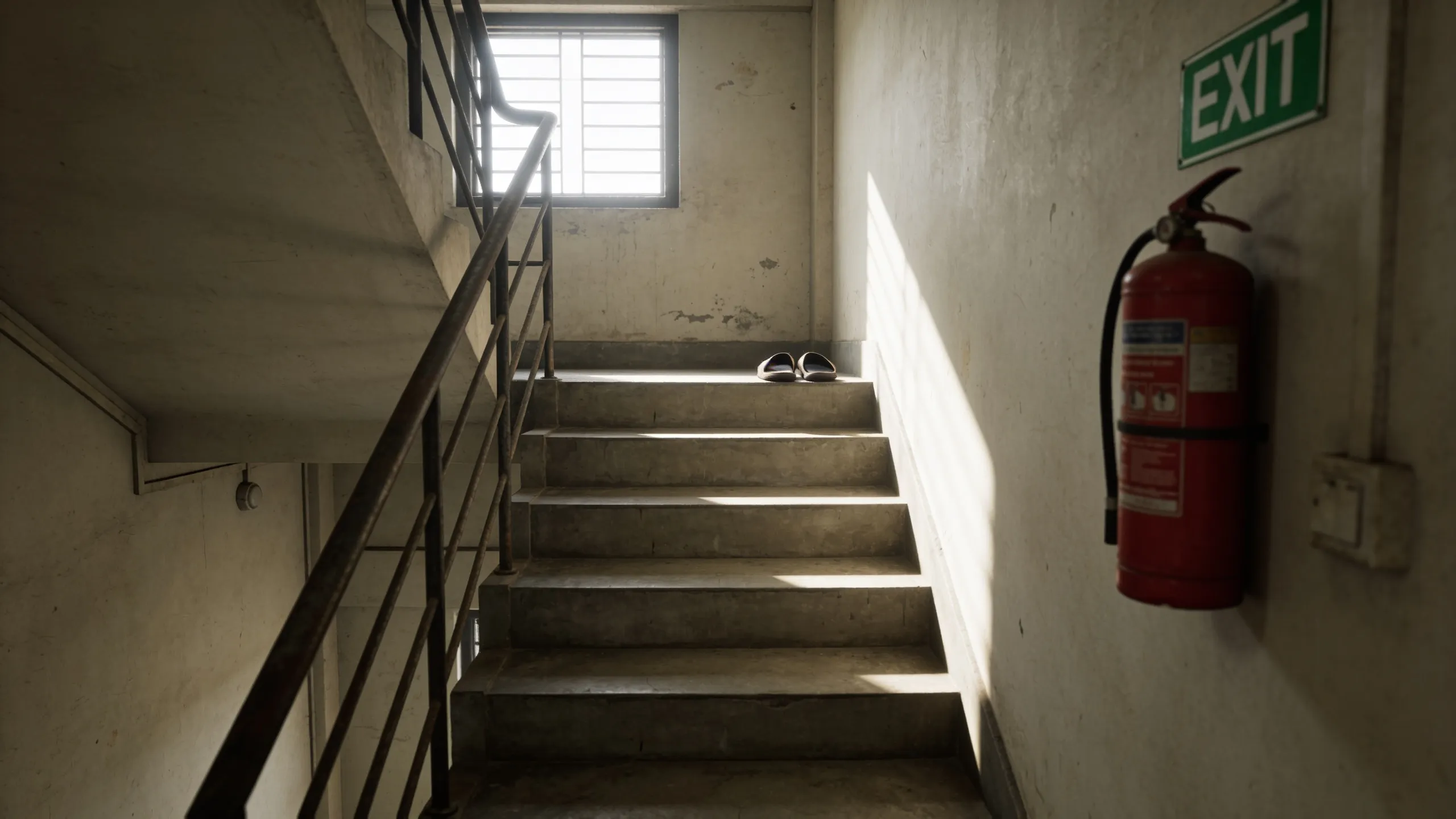 Walk the fire exits on your first day. If the staircase is blocked with stored luggage, report it immediately.
Fire Safety, Exits Before Anything Else
On your first day in the hostel, walk the building. Find every fire exit, every staircase, and the main gate. In an emergency, muscle memory matters more than phone GPS.
- Identify two exit routes from your floor. If one staircase is blocked by smoke, you need another option.
- Check fire extinguisher locations. Note whether they're expired, many hostels skip maintenance on these. If the extinguisher gauge is in the red zone, report it to management in writing.
- Never block your door with furniture. In some hostels, students stack trunks against the door for "extra security", this slows your own exit in a fire.
- Don't charge phones, laptops, or power banks on the bed. Lithium battery fires are rare but real. Charge on a desk or the floor, away from fabric.
- Avoid overloading power strips. One extension board running a kettle, laptop charger, phone charger, and fan is a fire risk. If your room has only one power outlet, ask management for an additional wall socket, don't rely on multi-plug adapters stacked on each other.
Digital Safety, Your WiFi Is Not Private
Shared hostel WiFi is an open network. Everyone connected to the same router can potentially see your traffic.
- Use a VPN for any financial transactions or password entry. Free VPNs like ProtonVPN work for basic browsing protection.
- Never access your bank account on public or shared computers in the hostel common room.
- Change your WiFi password if your hostel gives individual credentials. Default passwords are often the same across all rooms.
- Turn off auto-connect for WiFi on your phone. Your device may connect to a rogue hotspot with the same name as your hostel WiFi.
- Enable two-factor authentication on UPI apps (Google Pay, PhonePe, Paytm) and email. If someone gets your phone unlocked, 2FA is your last wall.
If the hostel WiFi is too slow and you're considering a personal data plan, that also reduces your exposure to shared network risks.
Food and Water Safety
Mess food complaints are common, but food safety is more than taste.
- Check the water source. If the hostel uses a water purifier, check when the filter was last changed. Many RO units in hostels run past their filter life by months. If in doubt, buy a ₹600 portable water bottle with a built-in filter.
- Inspect food temperature. Mess food sitting in open containers at room temperature for hours breeds bacteria. If lunch was cooked at 11 AM and you eat at 3 PM from the same uncovered pot, that's a stomach infection waiting to happen.
- Store snacks in sealed containers. Open biscuit packets and chips invite cockroaches and ants. Airtight containers (₹50–₹100 for a set) solve this.
- Wash your hands before eating. Basic, yes. But in shared dining settings where 30 students rotate through the same table, it matters more. Keep a small hand sanitizer in your pocket.
Your hostel food survival guide covers more on eating well within hostel constraints.
Student Safety Tips, Especially After Dark
- Share your live location with a family member or close friend when you go out at night. Google Maps and WhatsApp both support this.
- Save emergency contacts on your lock screen. Add the local police station number, the nearest hospital, and your hostel warden's number. In an emergency, someone picking up your phone should see these numbers without unlocking it.
- Use the buddy system for late-night outings. Going to a nearby ATM at midnight? Take a roommate. Going to the railway station at 4 AM for an early train? Share an auto with someone.
- Know your commute routes. If you live near a hostel in Pune's Hinjewadi area or a PG in Delhi's Rohini, learn which lanes are well-lit at night and which ones are deserted. Main roads over shortcuts. Always.
- Trust your instincts. If a situation, a person, or a place feels wrong, leave. You don't owe politeness to discomfort.
Night Travel Safety Tips
- Book autos and cabs only through apps (Ola, Uber, Rapido). Share the ride details with someone.
- Avoid last local trains or metros if you're alone. The 11 PM metro in Delhi or the last Harbour Line local in Mumbai can be empty and uncomfortable.
- If walking at night, keep your phone in your pocket, not in your hand. Phone snatching is common in certain areas.
- Carry a personal safety alarm or a loud whistle. They cost ₹100–₹200 and attract attention in seconds.
What to Do in an Emergency
| Emergency Type | Immediate Action | Number to Call |
|---|---|---|
| Fire | Evacuate, do not use lift, call fire brigade | 101 |
| Medical emergency | First aid, then call ambulance | 102 or 108 |
| Theft / break-in | Report to warden, then file FIR | 100 (Police) |
| Women's helpline | Available 24/7, anonymous | 181 |
| Disaster / natural emergency | Evacuate, follow building warden instructions | 112 (ERSS) |
Save these numbers in your phone today, not after something happens.
Key Takeaways
- Lock your room every time you step out, even for 5 minutes. Use your own padlock.
- Photograph documents, keep originals at home, and split your cash stash.
- Walk the fire exits on day one. Check extinguisher gauges. Never charge devices on the bed.
- Use a VPN on shared hostel WiFi. Enable 2FA on all financial apps.
- Verify water purifier maintenance and food storage hygiene in the mess.
- Share live location during night outings. Save emergency numbers on your lock screen.
Browse hostels with verified safety features before you move in.